
The Bengal Cat
The exotic wild look of a leopard but with the temperament and safety of the domestic cat. Learn about this remarkable breed and what makes them such captivating companions.
Physical Characteristics
Coat
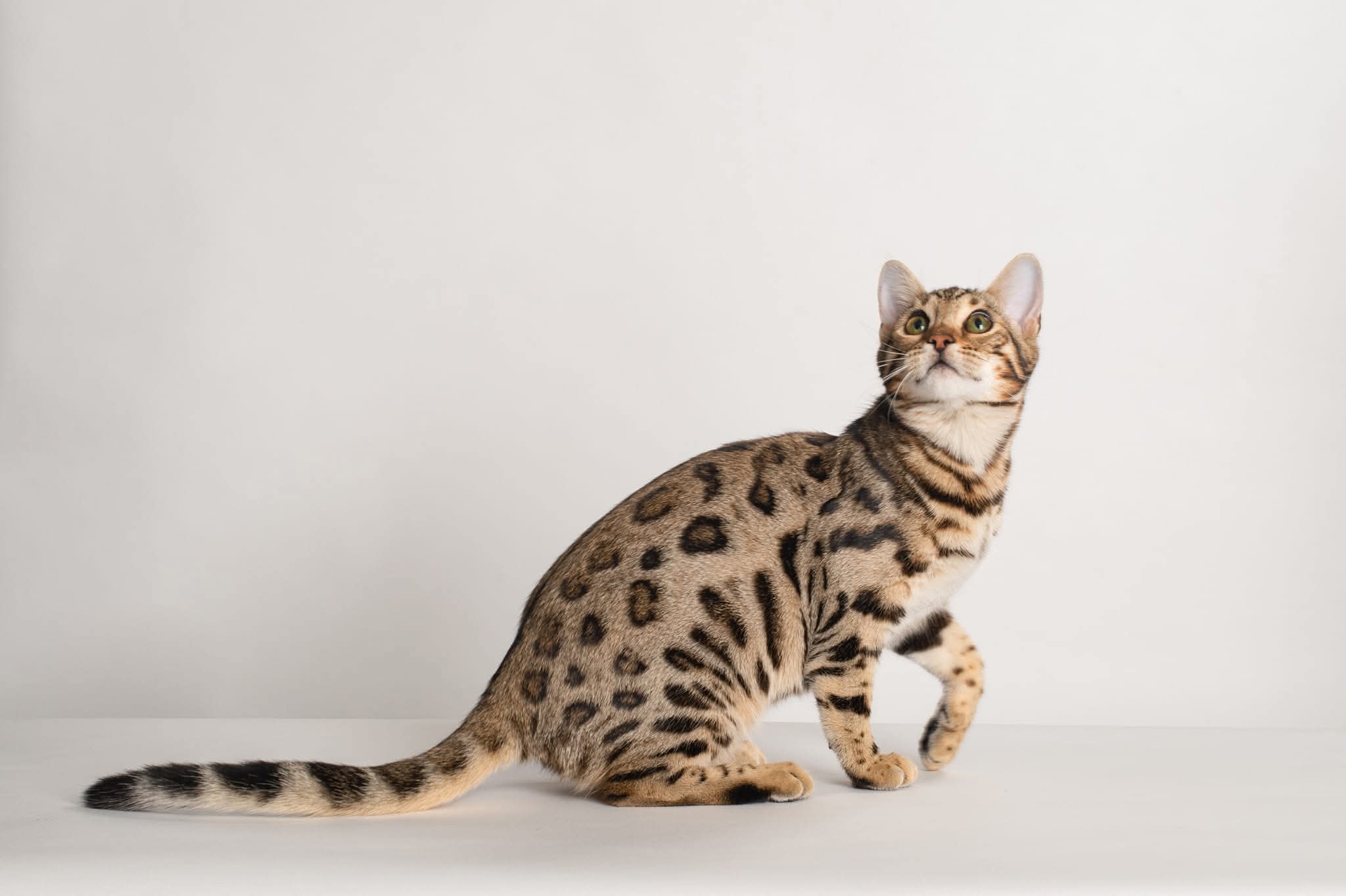
Bengals are low shedding with soft, mink-like coats requiring minimal grooming. The standard Bengal has a short, dense coat, while the Cashmere (longhair) variety has a silky, medium-length coat. Many Bengals possess a distinctive glitter that sparkles in sunlight.
Markings
Bengals display striking spotted or marbled patterns. Spots can be solid (single-tone) or rosetted (two-toned, mimicking a leopard or jaguar). Rosettes come in several types: arrowhead, paw print, doughnut, and clouded.
Build
A medium to large cat with a long, muscular body, strong legs, and a thick tail that tapers to a rounded tip. Males typically weigh 4.5-7 kg and females 3.5-5.5 kg. Their powerful build gives them an athletic, wild appearance.
Head & Face
The Bengal has a broad, modified wedge-shaped head with high cheekbones, a strong chin, and prominent whisker pads. Their ears are medium-small with rounded tips. Large, oval eyes are set wide apart, giving an alert, curious expression.
Colours
Bengals come in a range of colours including brown (the most common), snow (seal lynx point, seal mink, seal sepia), silver, charcoal, blue, and melanistic (solid black). Each colour has its own unique beauty.
Glitter
Many Bengals possess a unique trait called "glitter" -- a translucent, hollow hair shaft that catches and reflects light, making the coat appear to sparkle with gold or silver dust. This trait is unique to the Bengal breed.
Temperament & Personality
Bengals are playful, active, inquisitive, nosy, noisy, comical and affectionate. They are definitely not couch potato cats.
Active & Energetic
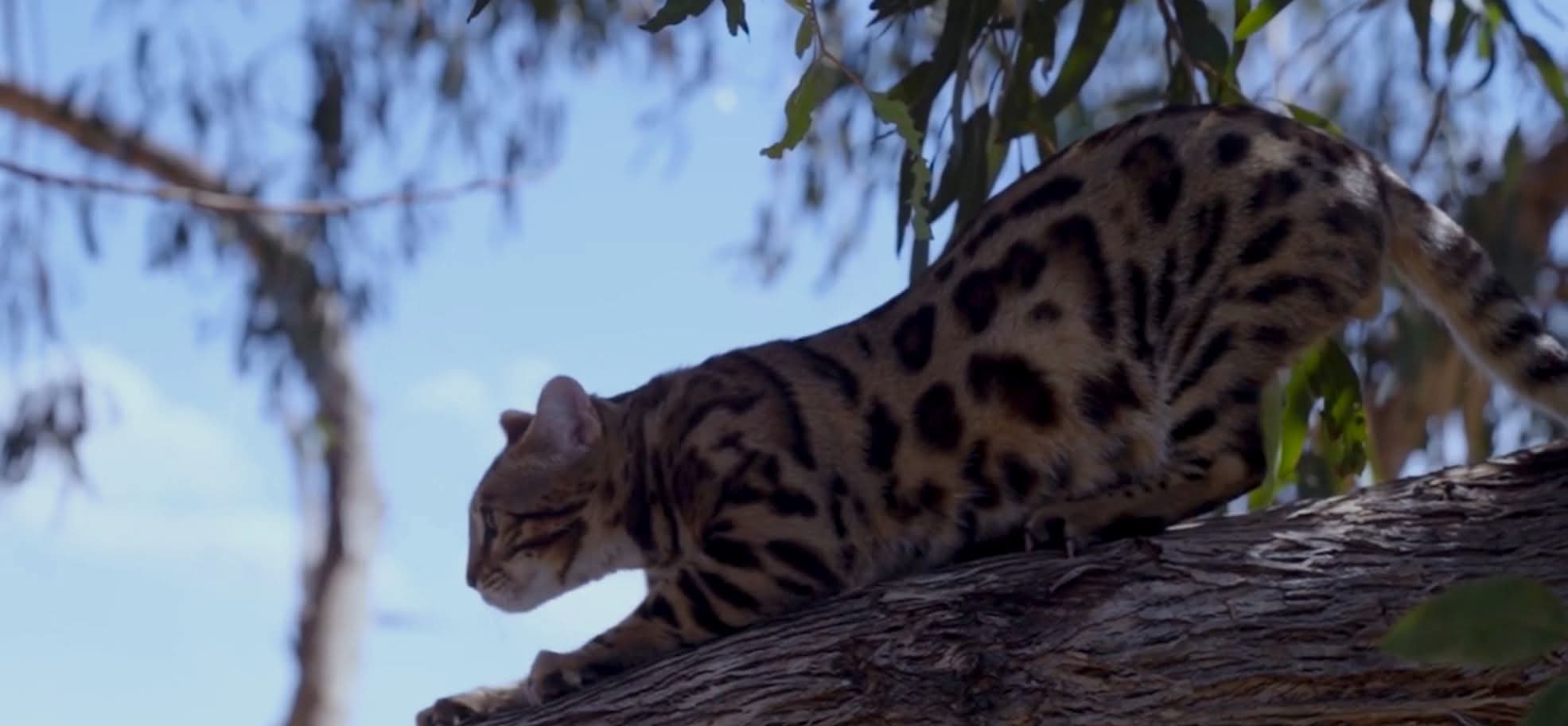
Bengals are highly active cats that love to play, climb, and explore. They retain a kitten-like energy well into adulthood and require consistent rules, training, and expectations. Interactive toys, cat trees, and play sessions are essential for a happy Bengal.
Highly Intelligent
Bengals are easy to train. They can learn to fetch, sit, come on command, and walk on a harness. They are problem-solvers who enjoy puzzle feeders and interactive games. They quickly learn routines and can be trained using positive reinforcement.
Affectionate & Low Allergen
Despite their wild appearance, Bengals are deeply affectionate cats that form strong bonds with their families. Many people with cat allergies find they tolerate Bengals better due to lower Fel d 1 protein levels in their saliva and skin.
Water Lovers & Explorers
Most Bengals enjoy playing in water, a trait inherited from their wild ancestors. They are natural explorers with an insatiable curiosity, love high vantage points, and their bold, confident nature means they adapt well to new situations when properly socialised.
Is a Bengal Right for You?
Bengals require consistent rules, training, and expectations. They thrive best with owners who can provide plenty of attention, play, and mental stimulation. They do well in homes with other active pets and enjoy interactive play.
Bengals are not suited for owners wanting quiet, sedentary pets. But if you want a vibrant, engaging, and stunningly beautiful feline companion who will keep you entertained and fill your life with love, the Bengal could be your perfect match.